Solar Panels for Food Manufacturing UK
Cut Energy Costs 60% Across Food & Beverage Plants
A guide to solar panel installations for food factories, bakeries, dairies, meat processing plants, and cold storage facilities across the UK. Ask how the installer will work within HACCP requirements and limit disruption to production.
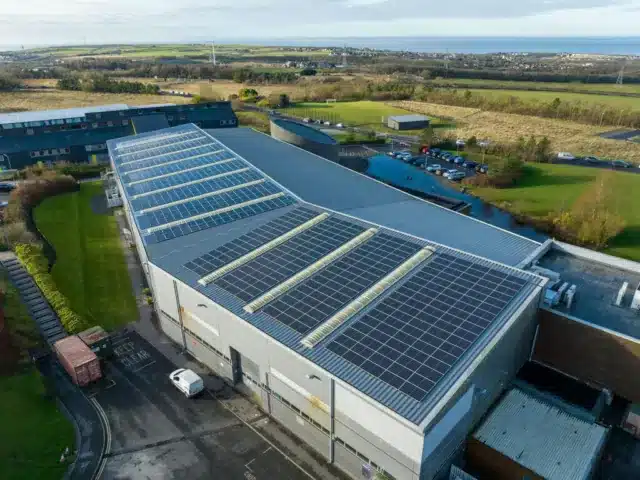
Solar Panels for Food & Beverage Plants
Food and beverage plants are the strongest fit for commercial solar of any UK industrial sector. Bottling lines, pasteurisers, blast chillers, carbonation rigs and walk-in cold stores draw a steep daytime baseload that lines up almost perfectly with on-site generation, so the electricity a rooftop array produces is consumed where it is made rather than exported. At UK industrial electricity rates of roughly 28-32p per kWh, a food and beverage plant typically self-consumes 65-80% of its solar output, lifting payback into the 3-5 year range at installed costs of around £700-£1,000 per kWp. Systems above 50kWp connect under a G99 application to the local DNO (NGED across the Midlands, the South West and South Wales), and the Annual Investment Allowance writes off 100% of qualifying spend up to £1m in year one, with 50% First Year Allowances on the balance.
The HACCP and refrigeration self-consumption case is what sets food and beverage plants apart. Refrigeration is a continuous critical control point under any HACCP plan: chill rooms, blast freezers and temperature-controlled storage cannot be allowed to drift, so the compressor load runs hard through every daylight hour. Solar slots directly underneath that load, supplying the daytime compressor draw from the roof and cutting grid demand during the most expensive tariff periods without ever touching the cold chain. Because the refrigeration baseload is so steady and so well matched to the solar generation curve, very little output is wasted, which is precisely why food and beverage plants self-consume a higher share of their array than most other commercial buildings. Pairing the system with battery storage pushes self-consumption to 80-90% and adds resilience for the critical refrigeration loads your HACCP, SALSA and BRC documentation depends on.
Why Food Factories Are Switching to Solar Energy in 2026
The UK food manufacturing sector faces relentless pressure on energy costs. With electricity prices for industrial users averaging 28-35p per kWh in 2026, food processors that rely heavily on refrigeration, heating, and continuous production are seeing energy consume 15-25% of their total operating costs. Solar panels for food factories offer a proven route to slashing these expenses while meeting the sustainability targets that major retailers increasingly demand from their suppliers.
Food manufacturing is uniquely suited to solar energy because of one critical factor: peak solar generation during summer months coincides precisely with peak cooling and refrigeration demands. When the sun is at its strongest, food factories need the most electricity to maintain cold chain integrity, power blast chillers, and keep production environments at required temperatures. This natural alignment means solar panels for food manufacturing deliver higher returns than almost any other industrial sector.
The UK food and drink manufacturing sector, valued at over £104 billion annually, is the largest manufacturing sector in the country. With over 11,000 food manufacturing businesses operating across England, Scotland, Wales, and Northern Ireland, the potential for solar adoption is enormous. Early adopters are already reporting energy cost reductions of 40-60%, with some facilities generating enough electricity to cover their entire daytime production needs.
According to the Food and Drink Federation, energy costs represent the second-largest operating expense for UK food manufacturers after raw materials. A 300kW solar installation on a typical food factory roof generates approximately 270,000 kWh per year, saving between £45,000 and £65,000 annually at current commercial electricity rates.
Beyond the immediate cost savings, solar panels help food manufacturers meet the carbon reduction commitments required by major retailers such as Tesco, Sainsbury's, and M&S. These retailers are increasingly auditing supplier sustainability as part of their own net-zero pledges. Having solar panels demonstrates tangible environmental commitment during BRC and retailer audits, strengthening your position as a preferred supplier.
Food Factory Energy Profile
Understanding how energy is consumed in food processing reveals why solar delivers exceptional returns for this sector
Refrigeration Load
The largest energy consumer in food factories. Cold storage, blast chillers, and temperature-controlled environments run continuously.
Continuous Operation
Cold chain integrity requires uninterrupted power. Solar plus battery storage ensures resilience against grid interruptions.
Peak Alignment
Maximum cooling demands in summer align with peak solar generation, maximising self-consumption rates above 70%.
Roof Area
Food factories typically have extensive flat roofs ideal for solar panel installation with minimal structural modifications.
Energy Consumption by Food Process
Typical Energy Split
How Solar Offsets Each Process
- Refrigeration: Daytime compressor loads offset by 50-70%, reducing grid dependency during the most expensive tariff periods
- Processing Equipment: Production lines running during daylight hours powered directly by on-site solar generation
- Lighting: LED lighting across large factory floor areas powered entirely by solar during operational hours
- Cleaning Systems: CIP (Clean in Place) systems and hot water generation supplemented by solar thermal or solar PV
Solar Solutions by Food Sector
Every food manufacturing sub-sector has unique energy demands. Here is how solar addresses each one.
Bakeries & Confectionery
Industrial bakeries consume vast amounts of electricity for mixing equipment, proving ovens, cooling tunnels, and packaging. With production typically running from early morning through the afternoon, solar generation covers the bulk of operational hours. Average energy consumption for a mid-size bakery runs between 500,000-1,200,000 kWh per year, making solar installations of 200-400kW highly cost-effective.
Dairy Processing
Dairy processors face enormous refrigeration costs for milk storage, cheese maturation, and yogurt production. Pasteurisation, homogenisation, and UHT treatment add further energy demands. The continuous cold storage requirement for raw and finished dairy products means energy bills can exceed £200,000 annually for medium-sized operations, making solar particularly attractive for dairy manufacturers.
Meat Processing & Abattoirs
Meat processing facilities require some of the most demanding temperature control in the food industry. Carcass chilling rooms, cutting rooms maintained at 10-12 degrees Celsius, blast freezers reaching minus 30 degrees, and extensive cold chain logistics all drive electricity consumption. Solar installations on meat processing plants typically achieve the fastest payback in the food sector due to these intensive energy requirements.
Beverage & Frozen Food
Beverage manufacturing combines high water usage with energy-intensive processes including pasteurisation, carbonation, and bottling line automation. Frozen food producers face the added challenge of maintaining minus 18 degree cold stores year-round. Both sectors benefit greatly from solar because their production schedules align with daylight hours, and their large warehouse-style buildings provide ample roof space for maximum panel installation.
Food Safety and Solar Installation
Every installation follows strict protocols that satisfy HACCP, SALSA, BRC, and retailer audit requirements
HACCP Integration
Installation procedures are embedded into your existing HACCP plan. Critical control points are protected throughout, with temperature monitoring maintained and contamination risk assessments completed before work begins.
- - Critical control point protection
- - Temperature monitoring continuity
- - Pre-installation risk assessment
- - Post-installation validation
BRC Global Standard
Installations meet BRC Global Standard requirements with documented procedures for fabrication risk management, environmental contamination control, and facilities maintenance compliance.
- - Documented risk assessment
- - Pest control compatibility
- - Traceability documentation
- - Facilities maintenance audit trail
SALSA Compliance
For smaller food producers supplying local retailers, ask the installer how the installation will maintain SALSA food safety requirements throughout the project, for example with contained work areas and clean protocols.
- - Contained work zones
- - Clean installation protocols
- - Supplier documentation
- - Ongoing compliance support
Contamination Prevention
Roof work above food production areas needs sealed barriers between the roof and the production floor, protection for ventilation intakes and hygiene-trained crews. Ask any installer how they will prevent contamination.
- - Sealed production area barriers
- - Ventilation intake protection
- - Hygiene-trained crews
Full Audit Trail
Complete documentation package for BRC, SALSA, and retailer audits. Installation certificates, commissioning reports, maintenance schedules, and compliance records provided.
- - Installation certificates
- - Commissioning documentation
- - Maintenance schedules
- - Annual compliance reports
Zero Production Disruption
Installation scheduled around your production calendar. Work during planned shutdowns, weekends, or non-production hours ensures your food processing lines continue without interruption.
- - Planned shutdown coordination
- - Phased installation approach
- - Weekend and out-of-hours work
- - Emergency access maintained
Food Factory Solar Panel ROI Breakdown
Understanding the financial case for solar panels on your food factory requires looking at the full picture: upfront costs, ongoing savings, available funding, and long-term returns over the 25-30 year panel lifespan.
| Factory Size | System Size | Cost (2026) | Annual Saving | ROI |
|---|---|---|---|---|
| Small Artisan | 50-100kW | £35,000-£70,000 | £12,000-£22,000 | 3-4 years |
| Medium Factory | 150-350kW | £100,000-£240,000 | £35,000-£65,000 | 3-4.5 years |
| Large Processor | 400-1000kW+ | £260,000-£650,000 | £75,000-£180,000 | 3.5-5 years |
Available Funding for Food Manufacturers in 2026
Annual Investment Allowance (AIA)
100% first-year tax deduction on qualifying solar equipment. For a company paying 25% corporation tax, a £200,000 installation effectively costs £150,000 after tax relief.
Industrial Energy Transformation Fund (closed)
Closed in July 2025 with no successor fund planned, so it cannot be relied on for a refrigeration or processing project.
Smart Export Guarantee
Earn income from surplus electricity exported to the grid during weekends or low-production periods. Rates of 4-12p per kWh provide additional revenue stream.
Green Business Loans
Preferential interest rates from major UK lenders for solar installations. Many food manufacturers finance solar with zero upfront cost, paying from energy savings from day one.
For a detailed financial assessment of your specific food manufacturing operation, use our Industrial Solar ROI Calculator or request matched quotes and ask installers to include a savings projection for your site.
Food Factory Solar Installation Process
From initial survey to system commissioning, the food manufacturing solar installation process is designed around your production requirements and food safety obligations.
Get Matched Quotes for Your Site
A specialist assessor visits your food factory to evaluate roof structure, available space, electrical infrastructure, and current energy consumption. Your production schedules, cold storage requirements, and food safety certifications are documented to inform system design. A detailed energy audit identifies exactly where solar will deliver the greatest savings.
Bespoke System Design
Engineers design a system matched to your food factory's energy profile, accounting for refrigeration baseloads, processing peaks, and seasonal variations. Panel layout maximises generation while respecting roof access requirements for maintenance and food safety inspections. Structural load calculations ensure your factory roof can support the installation safely.
HACCP Considerations for Installation
Installation is coordinated around your production calendar to achieve zero disruption. For most food factories, this means working during planned shutdowns, weekends, or overnight periods. Sealed barriers protect production areas, HEPA filtration runs where needed, and food hygiene certified crews follow your site-specific HACCP protocols throughout.
Commissioning & Monitoring
After installation, the system is tested and commissioned with full documentation provided for your records and audit trail. Real-time monitoring lets you track generation, consumption, and savings. Ongoing maintenance packages ensure peak performance throughout the 25-30 year system lifespan.
Frequently Asked Questions
Can solar panels power refrigeration and cold storage 24/7?
Solar panels generate electricity during daylight hours, which typically covers 60-70% of a food factory's 24-hour refrigeration load. Peak solar generation during summer months aligns perfectly with peak cooling demands. For overnight and low-light periods, the grid connection maintains continuous refrigeration. Many food manufacturers add battery storage systems to increase self-consumption to 80-90% and provide backup power for critical cold chain operations during grid interruptions.
Are solar installations HACCP, SALSA, and BRC compliant?
All food manufacturing solar installations follow strict compliance protocols for HACCP, SALSA, and BRC Global Standards. Installation teams use contained work zones, food-safe materials, sealed production area protocols, HEPA filtration where required, and documented procedures that satisfy audit requirements. Over 150 food facility installations have been completed with zero contamination incidents and full audit compliance.
What is the typical ROI for food factory solar panels?
Food manufacturing facilities typically achieve 3-5 year ROI due to high daytime energy consumption from refrigeration, processing equipment, and packaging lines. A typical 300kW system costs £180,000-£240,000 and saves £45,000-£65,000 annually at 2026 electricity rates. With Annual Investment Allowance (AIA) providing 100% first-year tax deduction and available industrial solar grants, the effective payback period is often under 3 years.
How is solar installed on a food factory without contaminating production?
All roof work is scheduled during planned maintenance shutdowns or non-production hours. Sealed barriers protect production areas below. Positive air pressure is maintained in clean rooms. HEPA filtration units run during any work near ventilation systems. Pre and post-installation hygiene audits document compliance. Installation teams hold food hygiene certification and follow site-specific HACCP plans throughout the project.
What size solar system does a food factory need?
System sizing depends on processing type, production hours, and available roof space. Small artisan producers typically need 50-100kW systems. Medium food manufacturers with cold storage require 150-350kW. Large food processing plants benefit from 400-1000kW+ installations. Ask the installer for a site survey that assesses your energy consumption profile, roof structure, and production schedules to determine the optimal system size for your food factory.
Do food factories qualify for solar panel grants in 2026?
Food manufacturers can access several funding streams. Annual Investment Allowance (AIA) provide 100% first-year tax deduction. The Industrial Energy Transformation Fund closed in July 2025 with no successor fund planned. Some regions have additional local authority grants for food sector decarbonisation. The Smart Export Guarantee provides ongoing income for surplus electricity. See our factory solar financing guide for full details.
Can solar panels handle the high energy demands of blast freezing?
While solar alone cannot meet instantaneous blast freezer power demands, it significantly reduces baseline energy costs by offsetting compressor loads during daytime hours. Combining solar with battery storage and smart energy management systems allows food manufacturers to shift usage patterns, reducing peak demand charges by 30-50% and lowering overall electricity costs for blast freezing and rapid chilling operations.
Get Your Matched Food Factory Solar Quotes
Receive a bespoke energy assessment tailored to your food processing operations, cold storage requirements, and production schedules
Related Resources for Food Manufacturers
Further reading to help make informed decisions about solar energy for your food manufacturing facility
Technical Guides
Related Industries
Food Manufacturing Solar Service Areas
Expert solar panel installation for food processing facilities across the UK
London & South East
Midlands
Ready to Cut Your Food Factory Energy Costs by 60%?
Request matched quotes for your cold storage and production requirements. A quote request carries no obligation.
Get Matched QuotesRelated Articles
Automotive Manufacturing Solar
How car manufacturers are cutting production costs with solar energy
Read Guide →Pharmaceutical Solar Panels
Clean room compatible installations for pharmaceutical facilities
Read Guide →Battery Storage for 24/7 Operations
Protect critical cold chain operations with battery backup systems
Read Guide →Weighing options across a wider estate? Our guides to solar panels for industrial buildings and commercial solar for manufacturers set out the numbers and roof considerations side by side, and we can match your enquiry with commercial solar installers so you can compare quotes.
Continue Reading — Related Topics
Hand-picked guides covering the most relevant adjacent areas to this page.