Solar Panels for Cold Storage Warehouses UK
Cold storage facilities consume 3-5x more electricity per square metre than standard warehouses. With compressors running 24/7 and peak demand during summer months perfectly aligned with solar generation, refrigerated warehouses achieve some of the fastest ROI in the industry.
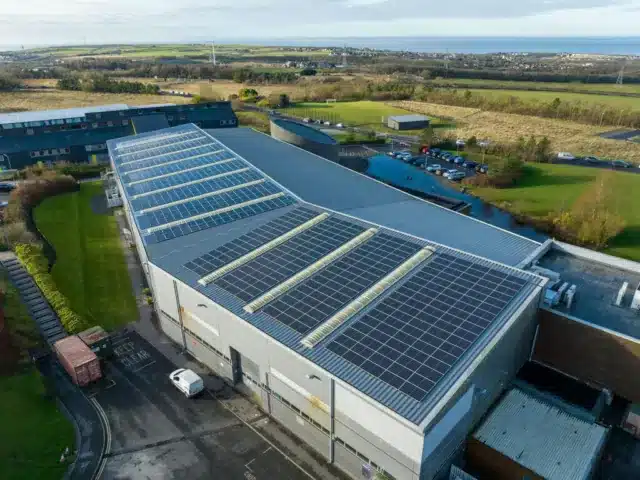
Why Cold Storage Facilities Are Ideal for Solar
Refrigerated warehouses have the highest energy consumption per square metre of any commercial building type, making them prime candidates for solar investment.
Cold Storage Energy Profile
Continuous refrigeration cycle - the largest single energy consumer running 24/7/365
Air circulation and heat rejection - peaks during warm weather aligned with solar output
LED warehouse lighting, dock levellers, forklift charging, office systems
Electric or hot gas defrost operations for evaporator coils
Typical Energy Consumption
The Solar-Cold Storage Advantage
Peak Demand Alignment
Summer heatwaves drive both peak solar generation and peak refrigeration demand. When your compressors work hardest, your solar system generates the most electricity.
Massive Base Load = High Self-Consumption
Unlike intermittent users, cold stores consume electricity continuously. Every kWh generated is used immediately, maximising the value of each solar panel installed.
Large Flat Roof Area
Cold storage warehouses typically have expansive flat roofs with minimal obstructions, providing maximum usable area for solar panel installation.
Energy Security for Critical Operations
Paired with battery storage, solar provides backup power for critical refrigeration, protecting millions of pounds of perishable stock during grid outages.
Scope 2 Emissions Reduction
Major retailers increasingly require cold chain suppliers to demonstrate carbon reduction. Solar provides verified, measurable Scope 2 reductions for ESG reporting.
Solar Energy for Cold Storage Facilities
Refrigerated warehouses and cold stores are among the most energy-intensive buildings in the UK. With compressors and evaporator fans running continuously, the building draws a large, steady base load 24 hours a day, 365 days a year. That base load is exactly what makes solar so effective here: almost every kilowatt-hour a rooftop array generates during daylight is consumed on site immediately, pushing self-consumption rates well above those of a typical office or standard warehouse. At UK industrial electricity rates of roughly 28–32p/kWh, every unit displaced by solar feeds straight to the bottom line, and the alignment of summer cooling demand with peak solar yield only improves the match.
How much of your refrigeration load solar can realistically offset depends on the storage temperature band, the available roof area, and how the load is distributed across the day. The colder the store, the higher the kWh per cubic metre — and the larger the array you can justify. The table below shows typical annual energy intensity by temperature band alongside the share of that load a well-sized rooftop system commonly offsets, before any battery is added.
Self-Consumption by Storage Temperature Band
| Store Temperature Band | Energy Intensity (kWh/m³/yr) | Typical Solar Offset (rooftop only) | Self-Consumption Rate |
|---|---|---|---|
| Ambient / dry store (15°C+) | 8–15 | 15–25% | 60–70% |
| Chilled (2°C to 5°C) | 30–55 | 20–30% | 80–90% |
| Cold store (−5°C to 0°C) | 45–70 | 20–28% | 85–92% |
| Frozen (−18°C to −25°C) | 60–95 | 18–25% | 88–95% |
| Blast freezing (−30°C+) | 90–140 | 12–20% | 90–95% |
Offset percentages assume an unshaded flat roof with usable area roughly equal to the building footprint and a rooftop-only system (no battery). The colder the store, the higher the energy intensity but the lower the share a fixed roof area can cover, because total demand outstrips available roof. Adding battery storage typically lifts self-consumption by a further 5–10 points and raises the offset on frozen and blast-freezing stores. Self-consumption is high across every band because the refrigeration base load runs day and night, so daytime solar is rarely exported.
Worked ROI: 2,000 m² Cold Store
The figures below model a 2,000 m² chilled cold store on a single-storey insulated-panel roof. At commercial install rates of £700–£1,000/kWp and an industrial electricity price of 30p/kWh, the payback lands comfortably inside the 3–5 year range typical of high-base-load commercial sites. A system above 50kWp requires a G99 connection application to the local DNO — NGED across the Midlands, South West and South Wales.
| Metric | Figure | Basis |
|---|---|---|
| Usable roof area | ~1,700 m² | 2,000 m² footprint less plant, walkways & setbacks |
| System size | 250 kWp | ~6.8 m² per kWp on a flat roof (G99 connection) |
| Installed cost | £175,000–£212,500 | 250 kWp at £700–£850/kWp |
| Annual generation | ~237,500 kWh | 950 kWh per kWp UK average yield |
| Self-consumed | ~213,750 kWh (90%) | Continuous chilled base load absorbs nearly all output |
| Annual saving | ~£64,000 | 213,750 kWh self-used at 30p/kWh |
| Capital allowances | 100% AIA | Within the £1m Annual Investment Allowance; 50% FYA above it |
| Simple payback | ~3.0–3.3 years | Before AIA tax relief; faster once relief is applied |
Illustrative figures for a chilled 2,000 m² store at 2026 UK rates; actual yield, self-consumption and pricing vary by site, roof orientation and load profile. See the factory solar cost guide for full pricing and the industrial battery storage guide for how storage lifts these returns.
Solar Solutions by Cold Storage Type
Tailored solar system designs for every type of temperature-controlled facility
Frozen Storage (-18°C to -25°C)
The highest energy consumers in the cold chain. Typical system: 400-800kW. Annual savings: £90,000-£160,000. Payback: 2.8-3.5 years.
- Ammonia & CO2 compressor offsetting
- Battery backup for critical freezing
- Peak shaving for demand charges
Chilled Distribution (2-5°C)
High-throughput facilities with constant door openings. Typical system: 250-500kW. Annual savings: £55,000-£95,000. Payback: 3-4 years.
- Multi-zone temperature management
- Dock door energy loss mitigation
- EV fleet charging integration
Pharmaceutical Cold Chain
GDP-compliant storage requiring precise temperature control. Typical system: 200-400kW. Annual savings: £45,000-£80,000. Payback: 3.5-4.5 years.
- GDP & GMP compliance maintained
- UPS integration for critical loads
- Temperature monitoring continuity
Cold Storage Solar ROI Breakdown
Real-world cost and savings data for UK cold storage facilities at 2026 electricity rates
| Facility Type | Roof Area | System Size | Installed Cost | Annual Saving | Payback |
|---|---|---|---|---|---|
| Small Cold Store | 2,000m² | 150kW | £105,000 | £32,000 | 3.3 years |
| Medium Refrigerated Warehouse | 8,000m² | 400kW | £260,000 | £82,000 | 3.2 years |
| Large Frozen Distribution Centre | 20,000m² | 1MW | £580,000 | £195,000 | 3.0 years |
| Multi-Temperature DC + Battery | 15,000m² | 750kW + 500kWh | £620,000 | £155,000 | 4.0 years |
Based on 27.69p/kWh Ofgem non-domestic rate (Q1 2026), 950 kWh/kWp annual yield, and 85% self-consumption ratio typical for cold storage.
Cold Storage Solar Installation Process
Designed around 24/7 cold chain operations with zero disruption to temperature-controlled environments
Cold Chain Energy Audit
Half-hour interval data analysis of compressor loads, defrost cycles, dock operations, and seasonal demand patterns.
Roof & Structural Survey
Assessment of insulated roof panels, load capacity, membrane integrity, and optimal non-penetrative mounting approach.
Non-Disruptive Installation
Ballasted mounting preserves roof insulation envelope. Electrical works scheduled around operational requirements.
Commission & Optimise
System commissioned with real-time monitoring. Energy management optimised for your specific compressor scheduling.
Frequently Asked Questions
Common questions about solar panels for cold storage facilities
How much can cold storage facilities save with solar panels?
Do solar panels work effectively on insulated cold storage roofs?
Can solar panels offset the energy used by blast freezers?
What size solar system does a cold storage warehouse need?
Will solar installation disrupt cold chain operations?
Is battery storage worth adding to a cold storage solar system?
Can I install solar if I lease my cold store, or want zero upfront cost?
Does solar affect refrigeration reliability?
Will solar help my cold store meet the MEES EPC rules from April 2027?
Get Your Matched Cold Storage Solar Quotes
Request matched quotes and an installer can analyse your compressor loads, roof configuration and operational patterns to design a solar system for your facility.
Related Resources
Industrial Battery Storage Guide
How battery storage maximises cold storage solar ROI with peak shaving and backup power.
Factory Solar Costs 2026
Complete pricing guide for commercial and industrial solar installations.
Warehouse Solar Panel Guide
Comprehensive guide to solar panels for UK warehouses and distribution centres.
Cold Storage Solar Service Areas
Continue Reading — Related Topics
Hand-picked guides covering the most relevant adjacent areas to this page.
By Industry / Sector
Regional & Commercial Guides
Solar panel cold storage — why it's the highest-IRR commercial solar use case
Cold storage facilities are the single best-suited UK commercial buildings for solar PV. The combination of high continuous-24/7 refrigeration load, large flat or low-pitched warehouse roofs, three-phase electrical infrastructure, and (often) excess roof area beyond the operational footprint produces self-consumption rates of 95% or higher on a correctly-sized solar array — the highest of any commercial sector. Combined with the consistently high industrial electricity prices that cold storage operators pay (refrigeration is typically the single largest line item on a cold storage facility's energy bill), this translates into 3–4 year solar payback periods and IRRs of 22–28% over the 25-year operational life of the modules.
Commercial solar for cold stores — typical UK installation
A typical UK cold store using 1.2 GWh/year of grid electricity (a medium-sized 3PL refrigerated warehouse running 24/7 at -22°C) fits the perfect commercial solar profile. The solar system specification:
- Array size: 300–500 kWp depending on roof area (~5 sqm per kWp; most UK cold stores have ample roof)
- Inverter: central or string three-phase inverters with G99 grid connection
- Annual generation: 270–450 MWh (UK average 900 kWh/kWp)
- Self-consumption rate: 95%+ (continuous refrigeration load absorbs almost all daytime generation)
- Annual savings at 30p/kWh grid rate: £75,000–£130,000
- Install cost: £220,000–£430,000 (£700–£900/kWp)
- Payback: 3.0–3.5 years (often under 3 years after AIA tax relief)
- 25-year NPV @ 5% discount: £950,000+ for a 400 kW system
Solar for cold stores UK — the operational fit
Cold storage refrigeration plant runs continuously, with peak compressor demand during summer afternoons when ambient temperature is highest and product door cycles are most frequent. Critically, peak refrigeration demand is also when solar generation peaks — the alignment between solar production and cold-store consumption is almost perfect on a 24/7 chilled or frozen warehouse. This means solar electricity is consumed on-site at the moment it's generated, rather than exported to grid at the much lower Smart Export Guarantee rate (typically 3–6p/kWh vs 28–32p/kWh self-consumption).
Battery storage for cold storage UK adds further value where Half-Hourly metered tariffs include time-of-use pricing. A 250 kWh battery paired with a 400 kW solar array can shift solar-generated electricity into the highest-cost evening peak periods (16:00–19:00 winter Triads), reducing TNUoS charges by an additional £8,000–£20,000/year for a medium cold store on a HH metered supply. The combined solar + battery system typically pays back in 4–5 years vs solar alone at 3 years.
Cold Store Solar: BRC/HACCP, Insulated Roofs & Refrigerant Safety
Cold storage solar projects in the UK have a few sector-specific considerations that separate a competent cold-chain installer from a general commercial PV contractor:
- BRC and HACCP compliance: any rooftop work over a chilled or frozen warehouse requires structured contamination control — sealed work areas, HEPA-filtered access points, regular hygiene inspections. Reputable cold-store solar installers carry food-hygiene-trained installation teams and document the controls in a site-specific HACCP plan.
- Insulated panel roofs: most modern UK cold stores use composite metal/polyurethane insulated roof panels. These panels are sensitive to penetrations (any breach risks thermal bridging and condensation problems). Modern non-penetrative ballasted mounting systems are the preferred approach — they sit on the roof under their own weight and use a friction mat to prevent slippage in wind uplift.
- Refrigerant safety zones: ammonia (NH₃) and CO₂ refrigeration plants have defined safety zones around discharge points. Solar array layouts must respect these zones; in some cases this constrains the usable roof area.
- EPC ratings: cold stores are typically classified as industrial buildings for EPC purposes. Solar PV installation typically lifts an EPC rating by 1–2 bands, worth noting that the previously proposed EPC C-by-2027 interim milestone was dropped in the government's June 2026 MEES response — the legal floor to let remains EPC E, with EPC B proposed for 2031 for buildings over 1,000 m².
Worked example: 3,800 m² chilled DC, East Midlands
An anonymised but representative project: a 3,800 m² chilled distribution centre in the East Midlands, running 24/7 at 2–4°C, drawing roughly 1.9 GWh/year from the grid at a blended industrial rate of 30p/kWh. The site had ample insulated-panel roof beyond the operational footprint, so the array was sized to the load rather than the roof.
| Metric | Figure | Basis |
|---|---|---|
| System size | 380 kWp | Sized to the chilled base load; G99 connection (Northern Powergrid) |
| Installed cost | ~£266,000 | 380 kWp at ~£700/kWp (non-penetrative ballasted mount) |
| Annual generation | ~361,000 kWh | 950 kWh per kWp UK average yield |
| Self-consumed | ~343,000 kWh (95%) | Continuous chilled load absorbs nearly all daytime output |
| Annual saving | ~£71,000 | ~343,000 kWh self-used at 30p/kWh + modest SEG export |
| Simple payback | ~3.7 years | Before AIA tax relief; faster once relief is applied |
Illustrative project at 2026 UK rates; actual yield, self-consumption and pricing vary by site, roof orientation and load profile.
Install timeline & zero cold-chain disruption
Every stage of a cold-store install is planned around your refrigeration plant staying live. Non-penetrative mounting means the insulated envelope is never breached, and the only momentary works that touch the supply (the final consumer-unit tie-in) are booked into an agreed window. Indicative programmes by system size:
| System size | On-site duration | Cold-chain impact |
|---|---|---|
| Up to 150 kWp | 2–3 weeks | None — rooftop works only; tie-in during a planned 2–4 hr window |
| 150–400 kWp | 3–5 weeks | None — staged DC strings; compressors run throughout |
| 400 kWp–1 MWp | 5–9 weeks | None — G99 switching scheduled out-of-hours with the DNO |
| 1 MWp + battery | 9–14 weeks | None — temporary power provisions cover any critical-load switching |
Worked AIA tax example
Take the £266,000 cold-store system above. Solar PV is a special-rate asset, so it does not qualify for full expensing — but it sits comfortably within the £1m Annual Investment Allowance, which gives a 100% first-year deduction:
- Capital cost: £266,000
- Deducted against profits in year one via AIA: £266,000
- Corporation tax relief at 25%: ~£66,500
- Effective net cost after relief: ~£199,500
That relief shortens the simple ~3.7-year payback to roughly 2.8 years on a post-tax basis. Spend above the £1m AIA cap drops to a 50% first-year allowance (special-rate FYA) with the balance written down at 6% thereafter. Always confirm the position with your accountant.
Ask any cold-store installer to size the system from your half-hourly meter data and to confirm how the design meets BRC/HACCP and G99 requirements. See the factory solar cost guide for full pricing, or the solar for food manufacturing page for production-site applications.
Solar power cold store — financial structures
Cold storage operators in the UK typically choose one of four financial structures for solar:
- Capital purchase + Annual Investment Allowance — best NPV. 100% first-year tax deduction on the first £1m of capex; the post-tax effective cost reduces by 19–25%.
- Asset finance — 5–10 year finance lease; annual payments less than annual electricity savings; positive cash flow from year 1.
- Power Purchase Agreement (PPA) — third party owns and operates the array; cold store pays a fixed tariff (typically 15–30% below grid) for 15–25 years; £0 upfront capital.
- Landlord-funded with tenant electricity arrangement — common for cold storage REITs and 3PL portfolios; landlord installs and recovers cost through a service charge or premium kWh tariff to the tenant.
For the highest-NPV outcome, profitable cold storage operators should always default to capital purchase + AIA. The 25-year value created is typically £900k+ on a 400 kW system, vs £600k+ via PPA — a £300k difference per site that compounds across a portfolio.
Get your matched factory solar quotes
Send your half-hourly meter data (any UK supplier provides it free) with your enquiry and an installer can model the financial case for solar on your premises. A quote request carries no obligation.