Commercial & Lightweight Solar Panels
London
Commercial, lightweight and thin-film solar guidance for London factories, warehouses and manufacturing facilities. Non-penetrative systems suit weak London commercial roofs; the guide covers all boroughs from Canary Wharf to Heathrow.
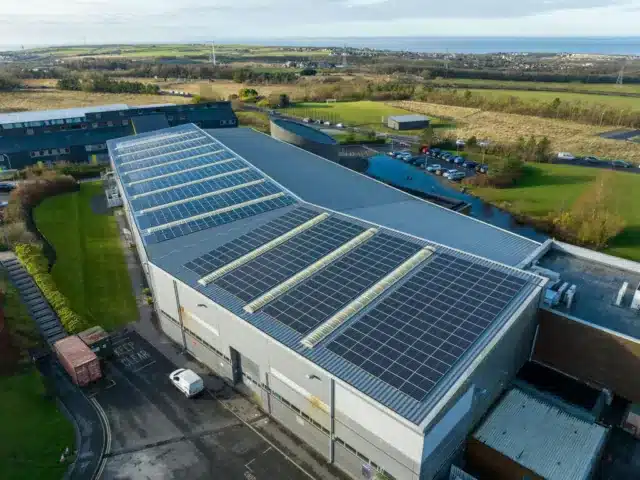
London Manufacturing & Industrial Solar
London remains a major manufacturing hub with over 40,000 manufacturing jobs across diverse industries from food processing in Park Royal to aerospace in Hayes.
Manufacturing Jobs
Across Greater London's industrial estates
Annual Savings
Generated for London manufacturers
Key London Industrial Areas
West London Industrial
- Park Royal (NW10, W3)
- Hayes & Southall (UB3, UB1)
- Heathrow Industrial (TW6, UB7)
- Feltham Trading Estate (TW13)
East London Industrial
- Canary Wharf & Isle of Dogs (E14)
- Stratford & Olympic Park (E15, E20)
- Dagenham Industrial (RM8, RM9)
- Barking Riverside (IG11)
South London Industrial
- Croydon Industrial (CR0, CR4)
- Wandsworth Industrial (SW18, SW19)
- Bermondsey & Old Kent Road (SE1, SE16)
- Sutton Industrial Estate (SM1)
Lightweight & Thin-Film Solar Panels for London Commercial Buildings
Many older London commercial buildings — Victorian warehouses, asbestos-cement industrial sheds, single-ply membrane roofs and converted Park Royal and Bermondsey units — cannot carry the 12–15 kg/m² dead load of a conventional framed solar array. For these weak roofs an installer may specify lightweight solar panels and thin-film systems that add as little as 3–6 kg/m², bringing solar within reach of structures that a standard mono-crystalline array would overload. A structural survey always comes first — see our factory roof weight & load guide for the load calculations.
Two routes dominate London's constrained rooftops. Non-penetrative (ballasted) mounting clamps to standing-seam metal or sits on weighted feet on flat membranes, so there are no roof penetrations to compromise the waterproof layer or breach a warranty — ideal for leased units where the landlord forbids drilling. Where dead load is critical, lightweight glass-free laminates and thin-film (CIGS/amorphous) panels bond directly to the roof skin, performing better than crystalline modules in London's diffuse light and partial shade. Both qualify for the same 100% Annual Investment Allowance and feed the same UK Power Networks (UKPN) G99 connection, so the financial case holds even on the capital's most challenging commercial roofs.
London Manufacturing Excellence
London and Greater London represent a vital hub of UK manufacturing, with a strong heritage and growing focus on sustainable energy solutions. This guide covers the grid, roof and incentive points that matter for a factory solar project in the area.
Key Industries in the Area
Food & Beverage
Pharmaceuticals
Logistics
Electronics
Local experience: Ask each installer what experience they have with Greater London manufacturers and how they would tailor a solar design to your industry.
London Factory Solar: Worked Examples
Illustrative worked examples for typical London manufacturers, modelled on 2026 UK benchmarks
London Food Processing Ltd
Major food processing facility in Park Royal industrial estate with high refrigeration demands
London Aerospace Components
Precision aerospace manufacturing facility near Heathrow with clean room requirements
East London Distribution Hub
Large distribution warehouse with automated sorting systems and cold storage
Excellent London Transport Links
London's industrial areas are well connected by major transport networks
M25 Orbital
Direct access to all London industrial estates via M25 junctions
A40 Western Avenue
Fast access to Park Royal, Hayes, and Heathrow industrial areas
DLR & Elizabeth Line
Excellent public transport to Canary Wharf and East London sites
North & South Circular
Comprehensive coverage of all London manufacturing areas
London Factory Solar FAQs
Common questions about solar installation in London
How much does factory solar installation cost in London?
London factory solar installations typically cost £800-£1,200 per kW installed, depending on roof complexity and system size. Most London factories see payback periods of 3-4 years with current energy prices.
What areas of London do you cover for factory solar?
This guide covers all 33 London boroughs including major industrial areas: Park Royal (NW10), Hayes (UB3), Dagenham (RM8), Croydon (CR0), Stratford (E15), and Canary Wharf (E14).
How quickly can solar panels be installed on a London factory?
Most London factory installations take 2-4 weeks from planning approval. Ask the installer to liaise with the London borough planning department and, where possible, to schedule work during planned maintenance shutdowns to minimise production disruption.
Do you handle London borough planning permissions?
Ask the installer who will handle any planning application with the London borough council. Most factory solar installations qualify for permitted development rights, but the installer should confirm compliance with local planning requirements and building regulations.
What's the typical energy savings for London factories?
London factories can offset part of their electricity costs with solar, with the share depending on shift pattern, roof area and tariff. With London's high commercial electricity rates (often 25-35p/kWh), solar provides excellent returns.
Get Your London Factory Solar Quote
Send your site details for your London manufacturing facility and we reply by email. Local team available across all London boroughs.
Factory solar guides by sector — London
Sector guides for London manufacturing facilities, warehouses and industrial operations.
Warehouse Solar Panels
Large-scale solar installations for distribution centres and logistics facilities in London.
Distribution Centre Solar
Specialized solar solutions for London distribution and fulfillment operations.
Food Manufacturing Solar
For London food processing facilities, ask the installer how the works will fit with your HACCP plan.
Automotive Manufacturing Solar
Solar solutions for London automotive plants and component manufacturers.
Pharmaceutical Solar
For London pharmaceutical facilities, ask the installer how the works will meet your GMP requirements.
Chemical Manufacturing Solar
For London chemical plants, ask the installer how the design will take account of COMAH and ATEX requirements.
Electronics Manufacturing Solar
Cleanroom-compatible solar for London electronics facilities.
Metal Fabrication Solar
High-power solar systems for London metal fabrication shops.
Textile Manufacturing Solar
Energy-efficient solar for London textile and garment facilities.
Plastics Manufacturing Solar
Solar solutions for London plastics processing and injection molding.
Factory Solar Panels
General manufacturing solar installations for London factories.
Grid Connection & DNO — London
Related Guides for London Manufacturers
Businesses across London weigh up commercial solar installers and typical solar panels for business before committing — we are an independent guide, and ask each installer you approach to quote the same specification so you can compare like-for-like quotes.
Solar ROI Benchmarks for London Manufacturers
London's industrial zones — Park Royal, Enfield, Canning Town, Charlton — host food manufacturing, distribution, printing and light engineering operations; UK Power Networks LPN grid connects sites with the UK's highest irradiance for a major city.
| System Size | Installed Cost | Annual Saving | Payback Period | CO2 Saved/yr |
|---|---|---|---|---|
| 100 kWp | £72,514 | £23,100/yr | 3.1 years | 24 tonnes |
| 350 kWp | £197,400 | £80,849/yr | 2.4 years | 86 tonnes |
| 1 MW | £473,357 | £231,000/yr | 2.0 years | 245 tonnes |
Helpful Resources for London Manufacturers
Expert guides and tools to help you make informed decisions
Getting Started
Technical Information
London industrial solar — the local picture
London is part of London, with population 8,908,081. Average commercial electricity spend per SME in London: ~£95,000/year.
Greater London Authority has a net zero target of 2030. Local framework: London Environment Strategy.
London Plan supports rooftop solar across commercial and residential. London Energy Efficiency Fund provides finance to public buildings. PV expected on all major new commercial development under London Plan Policy SI 2.
For UK industrial electricity at 27.69 p/kWh (illustrative: use your own tariff), a London factory drawing 800 MWh/year is paying ~£220,000/year for grid power. A 250 kW rooftop solar PV system on a typical factory roof will offset 35–55% of that, saving ~£58,000 in year 1 with full Annual Investment Allowance tax relief in year 1.
London factory solar by industry
Whatever sector your London factory operates in, the sector guides below cover the specifics.
London factory solar — expanded FAQ
How long does a London factory solar install take?
From contract signature to commissioned system: 8–14 weeks for systems up to 500 kW, 12–16 weeks for 1 MW+. The longest item is the G99 grid connection (6–18 months DNO timeline) which your installer should initiate before contract. Physical install on roof: 2–5 days for 100–500 kW, 5–10 days for 1 MW+. Installers typically schedule the work around your shutdown windows.
What grants are available for London manufacturers?
The Industrial Energy Transformation Fund (England, Wales and Northern Ireland) closed in July 2025 with no successor fund planned and never funded solar PV, so the Annual Investment Allowance (AIA) — 100% of capex up to £1m in year 1 — is the main relief. Locally, ask your local growth hub or combined authority about current regional business support.
Will I need planning permission in London?
In England, rooftop solar PV on non-domestic buildings is usually permitted development (Part 14, Class J of the GPDO) up to 1 MW, subject to conditions; Scotland, Wales and Northern Ireland have their own rules. Listed buildings, conservation areas and PV projecting more than 200mm above the roof need full planning. Your installer should confirm planning status before quoting.
What roof types suit factory solar in London?
All commercial roof types: standing seam metal (clamp-fix, no penetrations), profiled / corrugated metal (rail-mount), flat membrane (ballasted), single-ply EPDM (mechanically fixed). Asbestos-cement roofs cannot be retrofitted — refurbishment to a modern membrane is required first. See our roof weight load guide for structural requirements per roof type.
How do I get a quote for my London site?
Three steps. (1) Submit a quote request with your annual electricity spend and roof type. (2) We reply by email. (3) You can then ask any installer you approach to model your half-hourly meter data and roof, survey the site and send a proposal. A quote request carries no obligation.
Nearby city guides
Commercial solar panels London — Greater London commercial & industrial market
London is the UK's largest commercial property market but historically one of the lowest commercial solar deployment regions per square metre, due to high property prices (capital opportunity cost), constrained DNO grid capacity in central UK Power Networks (UKPN) areas, and tight conservation/heritage planning constraints. That picture is changing fast in 2026 as electricity prices remain elevated and London-headquartered occupiers face Scope 2 emissions disclosure pressure. Commercial solar panels London are now most actively deployed in the outer-London industrial belts — Park Royal, Hayes, Croydon, Dagenham, Stratford and Canary Wharf logistics corridors.
Commercial solar installations south London & west London — DNO context
London sits within UK Power Networks (UKPN) DNO area. UKPN's London Power Networks (LPN) and Eastern Power Networks (EPN) regions are the most grid-constrained in the UK, with G99 connection timelines typically 10–16 weeks for systems up to 250 kW, and 16–24+ weeks for 500 kW+. Many London commercial solar installations require G100 export-limiting devices because the local grid cannot accept full export — this constrains system sizing but doesn't prevent deployment.
For south London (Croydon, Sutton, Kingston, Wandsworth, Lambeth), the UKPN south-east network has slightly more headroom than central London. For west London (Hayes, Heathrow industrial belt, Ealing, Brent), the situation is mixed — Park Royal is heavily constrained but newer industrial estates may have capacity. For east London (Stratford, Dagenham, Barking, Newham), the recent grid upgrades around the Olympic Park area have improved connection capacity.
Business solar panels London — typical install profiles
- Park Royal industrial estate (NW10) — food production, logistics, light manufacturing — typical 100–500 kW installs, G99-constrained
- Hayes / Heathrow corridor (UB3, UB7) — aerospace, logistics, hospitality — typical 250 kW–1 MW
- Dagenham & Barking (RM8, RM9, IG11) — automotive (Ford), logistics, food production — typical 250–500 kW
- Croydon (CR0) — distribution, light manufacturing — typical 100–300 kW
- Stratford / Olympic Park (E15, E20) — large modern industrial roofs from Olympic redevelopment — typical 250 kW–1 MW
- Canary Wharf (E14) — office tower portfolios — landlord-funded with tenant tariff structures dominant
- City of London (EC postcodes) — small premium office solar deployments on listed-building-exempt roofs — typically 20–50 kW
Commercial solar panel installations London — cost considerations
London commercial solar installations cost slightly more than the UK average due to higher access, scaffolding and traffic management costs — typical £750–£950 per kWp installed (vs UK average £700–£900). Counter-balancing this, London businesses pay typically higher commercial electricity rates (often 30–35p/kWh including the London Capacity premium) so per-kWh savings are correspondingly higher. Net payback for London commercial solar is typically 3.5–4.5 years, very close to the UK average.
Send your site details
Send your half-hourly meter data (any UK supplier provides it free) with your enquiry and we reply by email. Ask any installer you approach to model the financial case for your premises against that data.