Commercial Solar Panels
Worcester & Worcestershire
Industrial solar guidance for Worcestershire and commercial solar for Worcester factories, warehouses and manufacturing sites — systems from 50 kWp to 2 MW+ for engineering and food processing sites in the Severn Valley's manufacturing heartland.
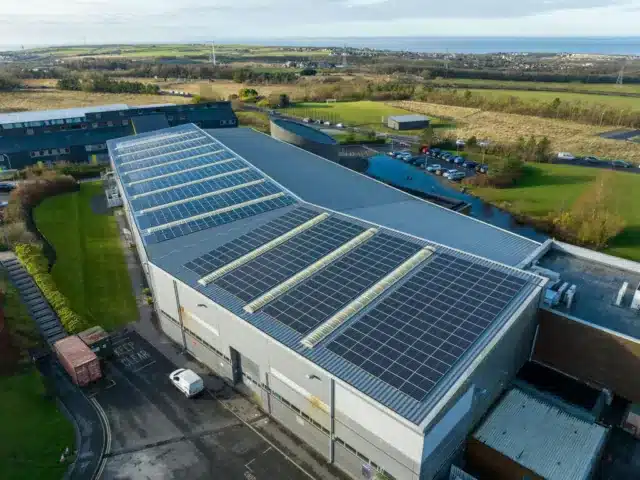
Worcester Manufacturing Excellence
Worcester and Worcestershire represent a vital hub of UK manufacturing, with a strong heritage and growing focus on sustainable energy solutions. This guide covers the grid, roof and incentive points that matter for a factory solar project in the area.
Key Industries in the Area
Engineering
Food Processing
Ceramics
Manufacturing
Local quotes: Manufacturers in Worcester and across Worcestershire can send their details, and we reply by email.
Worcester & Worcestershire: Worked Examples
Illustrative worked examples for typical facilities in the region, modelled on 2026 UK cost and yield benchmarks
Worcester Engineering Facility
Worked example for a typical engineering facility of this scale
Regional Food Processing Works
Precision food processing facility with modern production capabilities
Worcester Distribution Centre
Ceramics hub serving Worcestershire and beyond
Worcester Factory Solar FAQs
Common questions about solar installation in Worcester & Worcestershire
How much does factory solar installation cost in Worcester?
Worcester factory solar installations typically cost £720-£980 per kW installed. With the Annual Investment Allowance (AIA), most Worcestershire factories see payback periods of 3.0-3.8 years.
Is Worcester suitable for solar power generation?
Yes, Worcester receives approximately 980 kWh/m2 of solar irradiance annually - sufficient for excellent returns. Modern panels work efficiently year-round in UK conditions.
Which industries are most common in Worcester?
Worcester's manufacturing base includes Engineering, Food Processing, Ceramics. Each sector has its own requirements — see the sector guides below.
Is commercial battery storage an option in Worcester?
Yes. Commercial battery storage costs £400-£700 per kWh installed and is typically sized at 100-800 kWh for Worcestershire industrial sites. Paired with rooftop solar, a battery shifts stored energy into the NGED weekday red-band period (late afternoon to early evening) when distribution charges peak - cutting both unit rates and DUoS costs for sites at Blackpole Trading Estate, Shire Business Park and Worcester Six.
Is agricultural solar an option across Worcestershire?
Yes. Beyond Worcester's factories, agricultural solar is also an option across Worcestershire - Vale of Evesham glasshouse and polytunnel growers, fruit farms and packhouses, and barn rooftop systems. Steel-framed barn roofs typically install at £700-£1,000 per kWp with 3-5 year paybacks under the Annual Investment Allowance.
Get Your Worcester Factory Solar Quote
Send your site details for your Worcester or Worcestershire manufacturing facility and we reply by email.
Factory solar guides by sector — Worcester & Worcestershire
Sector guides for Worcester & Worcestershire manufacturing facilities, warehouses and industrial operations.
Warehouse Solar Panels
Large-scale solar installations for distribution centres and logistics facilities in Worcester & Worcestershire.
Distribution Centre Solar
Specialized solar solutions for Worcester & Worcestershire distribution and fulfillment operations.
Food Manufacturing Solar
Ask how the installer will work within HACCP requirements at Worcester & Worcestershire food processing facilities.
Automotive Manufacturing Solar
Solar solutions for Worcester & Worcestershire automotive plants and component manufacturers.
Pharmaceutical Solar
Ask how the installer will work within GMP requirements at Worcester & Worcestershire pharmaceutical facilities.
Chemical Manufacturing Solar
Ask how the installer will work within COMAH and ATEX requirements at Worcester & Worcestershire chemical plants.
Electronics Manufacturing Solar
Cleanroom-compatible solar for Worcester & Worcestershire electronics facilities.
Metal Fabrication Solar
High-power solar systems for Worcester & Worcestershire metal fabrication shops.
Textile Manufacturing Solar
Energy-efficient solar for Worcester & Worcestershire textile and garment facilities.
Plastics Manufacturing Solar
Solar solutions for Worcester & Worcestershire plastics processing and injection molding.
Factory Solar Panels
General manufacturing solar installations for Worcester & Worcestershire factories.
Grid Connection & DNO — Worcester
Related Guides for Worcester Manufacturers
For a Worcester site, compare solar panel grants for business and current business solar panels side by side, and ask each installer you approach for commercial references at your scale.
Solar ROI Benchmarks for Worcester Manufacturers
Worcester's engineering, food processing (HP Sauce heritage) and distribution at Shrub Hill Industrial Estate and Blackpole Retail Park benefit from National Grid Electricity Distribution (NGED) grid access and above-average Midlands solar performance.
| System Size | Installed Cost | Annual Saving | Payback Period | CO2 Saved/yr |
|---|---|---|---|---|
| 100 kWp | £72,146 | £19,200/yr | 3.8 years | 23 tonnes |
| 350 kWp | £196,400 | £67,200/yr | 2.9 years | 82 tonnes |
| 1 MW | £470,959 | £192,000/yr | 2.5 years | 233 tonnes |
Commercial Battery Storage Installers in Worcester
Worcester's industrial energy profile is made for battery storage. The city's engineering base — from the Yamazaki Mazak machine-tool plant on the north side of the city to the Worcester Bosch heating factory — runs power-hungry processes (CNC machining centres, laser cutters, test rigs, paint and brazing lines) that create sharp demand peaks a solar array alone can't flatten. Pairing rooftop PV with commercial battery storage lets a Worcestershire factory store midday solar generation and discharge it into the NGED weekday red-band period (late afternoon to early evening), when distribution-network charges on half-hourly supplies are at their highest.
Commercial battery systems currently install at £400–£700 per kWh, falling with scale. For most industrial units at Blackpole Trading Estate or Shire Business Park a 100–250 kWh battery alongside a 100–250 kWp array is the sweet spot; heavier process sites size at 300–800 kWh. Typical sizing for Worcestershire industry:
| Worcestershire site profile | Typical battery | Solar pairing | Primary job |
|---|---|---|---|
| Machine-tool & precision engineering (CNC-heavy loads) | 200–500 kWh | 250–500 kWp | Peak shaving + red-band avoidance |
| Food processing & cold storage | 300–800 kWh | 300 kWp–1 MW | 24/7 base-load shifting |
| Trading-estate unit (Blackpole, Shire Business Park) | 100–250 kWh | 100–250 kWp | Self-consumption maximisation |
| Large logistics shed (Worcester Six, M5 J6) | 250–600 kWh | 500 kWp–2 MW | Export capping + EV fleet charging |
Batteries qualify for the same 100% Annual Investment Allowance treatment as the solar array when installed as part of the system, and a battery lets a G99-constrained site keep building generation without exceeding its NGED export limit. Full sizing methodology, tariff mechanics and payback modelling in our industrial battery storage guide for UK factories.
Agricultural Solar Across Worcestershire
Worcestershire's rural economy is as energy-intensive as its factories. The Vale of Evesham — Britain's historic market-garden district south-east of Worcester — runs glasshouses and polytunnels with heating, ventilation, irrigation pumping and packhouse refrigeration loads that map almost perfectly onto solar generation: demand peaks in the bright months when the panels produce most. Fruit farms across the county face the same equation, with cold stores running flat-out through the late-summer picking season.
Barn rooftops are the county's cheapest solar real estate. A steel-framed agricultural barn takes rail-mounted panels with minimal structural work, installs at £700–£1,000 per kWp (falling with system size), and returns a 3–5 year payback at today's 28–32p/kWh commercial rates — with 100% Annual Investment Allowance relief in year one and Smart Export Guarantee income on surplus generation. Because farm demand is often lower than a big barn roof can generate, a G99 application to NGED (required above the G98 limit of 3.68 kW per phase) is usually the gating item on the larger systems; ask the installer whether they will prepare and submit it.
This page covers the whole county — Evesham, Pershore, Droitwich, Kidderminster and the farms along the M5 corridor either side of Worcester. For the full economics of glasshouse, polytunnel, packhouse and barn-roof systems, see our dedicated agricultural solar guide for the Gloucestershire–Worcestershire region.
Solar panels in Worcestershire: commercial installers for Worcester, Kidderminster and Malvern
Worcester is the anchor, but the wider county matters for solar panels in Worcestershire too. Kidderminster and the Wyre Forest estates in the north-west carry a long carpet-weaving and engineering heritage and plenty of large-roofed sheds; Malvern's technology and instrumentation cluster sits under the hills to the south-west; Droitwich Spa's trade estates hang off M5 Junction 5; and Bromsgrove and Redditch form a precision-engineering belt around Junction 4a and the M42. Add Worcester's own estates and you have a continuous M5 J4a–J7 corridor of factories, warehouses and food-processing units — an installer able to quote for Worcester Six, Blackpole Trading Estate and Shire Business Park (covered above) can usually quote for any of them.
The whole county sits in National Grid Electricity Distribution's West Midlands licence area, so the grid process is identical wherever the roof is: any system above the G98 limit of 3.68 kW per phase needs a G99 application to NGED before installation (typical timeline and fee band are in the DNO panel above). Rural substations around Malvern and the Wyre Forest fringe can carry less spare headroom than the network along the M5, so on those sites the installer should file the G99 first and size the array to the connection offer; where NGED caps export, an export-limiting scheme or a battery lets the site keep the full roof.
One question that comes up more each year — usually as in roof solar Worcester — is whether a commercial array should be in-roof or on-roof. On-roof (rail-mounted on profiled metal, clamp-fixed on standing seam) is the right answer for almost every existing shed: the weatherproof envelope is untouched, panels sit 100–150 mm above the sheet with an air gap that keeps them cooler and slightly more productive, individual panels can be swapped, and a 250 kWp roof is up in days. In-roof (integrated) systems make the PV part of the roof covering itself, so they only stack up when the roof is being built or re-covered anyway: a new unit at Worcester Six, a re-roof of an older asbestos-cement unit on an established estate such as Blackpole, or a design-and-build where a flush profile matters. The honest trade-offs: in-roof saves the cost of the covering it replaces and looks cleaner, but runs warmer (a few percent lower yield), is harder to service panel by panel, and ties the array's life to the roofing contract. Neither is “better” — it depends where the building is in its life; our roof weight and load guide covers the structural side of both.
Across the county, budget £700–£1,050 per kWp installed (ex-VAT at 20%) and roughly 950–1,000 kWh per kWp a year of generation, with 100% Annual Investment Allowance on the first £1m of qualifying spend and the permanent 50% first-year allowance above it. Neighbouring coverage: for the M5 J9–J12 estates south of the county line, see our commercial solar installers in Gloucester page.
Does this guide cover Kidderminster, Malvern, Redditch and Bromsgrove as well as Worcester?
Yes. This guide covers the whole of Worcestershire — Worcester, Kidderminster and the Wyre Forest, Malvern, Droitwich Spa, Redditch, Bromsgrove and Evesham — all on the same NGED West Midlands network and the same G99 process, and all within easy reach of Worcester. Ask each installer whether the site survey is free.
Is in-roof solar worth it for a Worcester factory?
Only if the roof is being built or re-covered anyway. On an existing profiled-metal or standing-seam shed, on-roof mounting is cheaper, cooler-running and easier to maintain. In-roof integrated PV pays off on new-builds and re-roofs because it replaces the covering it sits in — ask for both options priced side by side in your free quote.
Nearby Location Guides
Guides for nearby industrial locations
Helpful Resources for Worcester Manufacturers
Expert guides and tools to help you make informed decisions
Getting Started
Technical Information
Worcester industrial solar — the local picture
Worcester anchors Worcestershire's manufacturing economy on the M5 corridor. Yamazaki Mazak builds machine tools for the European market at its Worcester plant, Worcester Bosch manufactures heating systems in the city, and the estates at Blackpole and Shire Business Park host hundreds of engineering, food and distribution units — all on half-hourly supplies where daytime solar generation directly displaces the most expensive grid units.
Worcester City Council has declared a climate emergency and its environmental sustainability plans back commercial rooftop solar as one of the fastest routes to cutting the city's industrial emissions. The local grid is operated by National Grid Electricity Distribution (NGED), and the Worcester Six scheme at M5 Junction 6 shows the direction of travel: large modern sheds with roofs engineered for solar from day one.
For UK industrial electricity at 27.69 p/kWh (illustrative: use your own tariff), a Worcester factory drawing 800 MWh/year is paying ~£220,000/year for grid power. A 250 kW rooftop solar PV system on a typical factory roof will offset 35–55% of that, saving ~£58,000 in year 1 with full Annual Investment Allowance tax relief in year 1.
Worcester factory solar by industry
Whatever sector your Worcester factory operates in, the sector guides below cover the specifics.
Worcester factory solar — expanded FAQ
How long does a Worcester factory solar install take?
From contract signature to commissioned system: 8–14 weeks for systems up to 500 kW, 12–16 weeks for 1 MW+. The longest item is the G99 grid connection (6–18 months DNO timeline) which your installer should initiate before contract. Physical install on roof: 2–5 days for 100–500 kW, 5–10 days for 1 MW+. Installers typically schedule the work around your shutdown windows.
What grants are available for Worcester manufacturers?
The Industrial Energy Transformation Fund (England, Wales and Northern Ireland) closed in July 2025 with no successor fund planned and never funded solar PV, so the Annual Investment Allowance (AIA) — 100% of capex up to £1m in year 1 — is the main relief. Locally, ask your local growth hub or combined authority about current regional business support.
Will I need planning permission in Worcester?
In England, rooftop solar PV on non-domestic buildings is usually permitted development (Part 14, Class J of the GPDO) up to 1 MW, subject to conditions; Scotland, Wales and Northern Ireland have their own rules. Listed buildings, conservation areas and PV projecting more than 200mm above the roof need full planning. Your installer should confirm planning status before quoting.
What roof types suit factory solar in Worcester?
All commercial roof types: standing seam metal (clamp-fix, no penetrations), profiled / corrugated metal (rail-mount), flat membrane (ballasted), single-ply EPDM (mechanically fixed). Asbestos-cement roofs cannot be retrofitted — refurbishment to a modern membrane is required first. See our roof weight load guide for structural requirements per roof type.
How do I get a quote for my Worcester site?
Three steps. (1) Submit a quote request with your annual electricity spend and roof type. (2) We reply by email. (3) You can then ask any installer you approach to model your half-hourly meter data and roof, survey the site and send a proposal. A quote request carries no obligation.