Factory Solar Panel Installation
Lancashire - Red Rose County
Independent factory solar guidance across Lancashire's manufacturing centers.
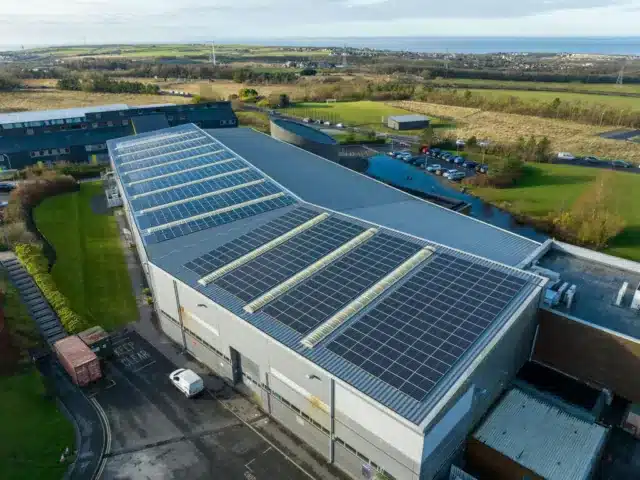
Lancashire Manufacturing Excellence
Lancashire and North West represent a vital hub of UK manufacturing, with a strong heritage and growing focus on sustainable energy solutions. This guide covers the grid, roof and incentive points that matter for a factory solar project in the area.
Key Industries in the Area
Aerospace (BAE)
Automotive
Food Processing
Textiles
Local experience: Ask each installer what experience they have with North West manufacturers and how they would tailor a solar design to your industry.
Lancashire & North West: Worked Examples
Illustrative worked examples for typical facilities in the region, modelled on 2026 UK cost and yield benchmarks
Lancashire Aerospace (BAE) Facility
Worked example for a typical aerospace (bae) facility of this scale
Regional Automotive Works
Precision automotive facility with modern production capabilities
Lancashire Distribution Centre
Food Processing hub serving North West and beyond
Lancashire Factory Solar FAQs
Common questions about solar installation in Lancashire & North West
How much does factory solar installation cost in Lancashire?
Lancashire factory solar installations typically cost £700-£960 per kW installed. With the Annual Investment Allowance (AIA), most North West factories see payback periods of 3.2-4.0 years.
Is Lancashire suitable for solar power generation?
Yes, Lancashire receives approximately 905 kWh/m2 of solar irradiance annually - sufficient for excellent returns. Modern panels work efficiently year-round in UK conditions.
Which industries are most common in Lancashire?
Lancashire's manufacturing base includes Aerospace (BAE), Automotive, Food Processing. Each sector has its own requirements — see the sector guides below.
Get Your Lancashire Factory Solar Quote
Send your site details for your Lancashire manufacturing facility and we reply by email.
Factory solar guides by sector — Lancashire - Red Rose County
Sector guides for Lancashire - Red Rose County manufacturing facilities, warehouses and industrial operations.
Warehouse Solar Panels
Large-scale solar installations for distribution centres and logistics facilities in Lancashire - Red Rose County.
Distribution Centre Solar
Specialized solar solutions for Lancashire - Red Rose County distribution and fulfillment operations.
Food Manufacturing Solar
For Lancashire - Red Rose County food processing facilities, ask the installer how the works will fit with your HACCP plan.
Automotive Manufacturing Solar
Solar solutions for Lancashire - Red Rose County automotive plants and component manufacturers.
Pharmaceutical Solar
Ask how the installer will meet GMP requirements at pharmaceutical facilities in Lancashire - Red Rose County.
Chemical Manufacturing Solar
For Lancashire - Red Rose County chemical plants, ask the installer how the design will take account of COMAH and ATEX requirements.
Electronics Manufacturing Solar
Cleanroom-compatible solar for Lancashire - Red Rose County electronics facilities.
Metal Fabrication Solar
High-power solar systems for Lancashire - Red Rose County metal fabrication shops.
Textile Manufacturing Solar
Energy-efficient solar for Lancashire - Red Rose County textile and garment facilities.
Plastics Manufacturing Solar
Solar solutions for Lancashire - Red Rose County plastics processing and injection molding.
Factory Solar Panels
General manufacturing solar installations for Lancashire - Red Rose County factories.
Grid Connection & DNO — Lancashire - Red Rose County
Related Guides for Lancashire - Red Rose County Manufacturers
Planning a Lancashire - Red Rose County project? It pays to review commercial solar panel cost and understand best commercial solar companies first, then request quotes from installers you shortlist.
Solar ROI Benchmarks for Lancashire - Red Rose County Manufacturers
Lancashire's aerospace manufacturing cluster — BAE Systems Samlesbury and Warton, Rolls-Royce Preston — alongside food processing and textiles runs highly energy-intensive 24/7 shift patterns ideal for solar self-consumption.
| System Size | Installed Cost | Annual Saving | Payback Period | CO2 Saved/yr |
|---|---|---|---|---|
| 100 kWp | £71,595 | £17,112/yr | 4.2 years | 22 tonnes |
| 350 kWp | £194,900 | £59,893/yr | 3.3 years | 75 tonnes |
| 1 MW | £467,362 | £171,125/yr | 2.7 years | 216 tonnes |
Helpful Resources for Lancashire Manufacturers
Expert guides and tools to help you make informed decisions
Getting Started
Technical Information
Lancashire industrial solar — the local picture
For UK industrial electricity at 27.69 p/kWh (illustrative: use your own tariff), a Lancashire factory drawing 800 MWh/year is paying ~£220,000/year for grid power. A 250 kW rooftop solar PV system on a typical factory roof will offset 35–55% of that, saving ~£58,000 in year 1 with full Annual Investment Allowance tax relief in year 1.
Lancashire factory solar by industry
Whatever sector your Lancashire factory operates in, the sector guides below cover the specifics.
Lancashire factory solar — expanded FAQ
How long does a Lancashire factory solar install take?
From contract signature to commissioned system: 8–14 weeks for systems up to 500 kW, 12–16 weeks for 1 MW+. The longest item is the G99 grid connection (6–18 months DNO timeline) which your installer should initiate before contract. Physical install on roof: 2–5 days for 100–500 kW, 5–10 days for 1 MW+. Installers typically schedule the work around your shutdown windows.
What grants are available for Lancashire manufacturers?
The Industrial Energy Transformation Fund (England, Wales and Northern Ireland) closed in July 2025 with no successor fund planned and never funded solar PV, so the Annual Investment Allowance (AIA) — 100% of capex up to £1m in year 1 — is the main relief. Locally, ask your local growth hub or combined authority about current regional business support.
Will I need planning permission in Lancashire?
In England, rooftop solar PV on non-domestic buildings is usually permitted development (Part 14, Class J of the GPDO) up to 1 MW, subject to conditions; Scotland, Wales and Northern Ireland have their own rules. Listed buildings, conservation areas and PV projecting more than 200mm above the roof need full planning. Your installer should confirm planning status before quoting.
What roof types suit factory solar in Lancashire?
All commercial roof types: standing seam metal (clamp-fix, no penetrations), profiled / corrugated metal (rail-mount), flat membrane (ballasted), single-ply EPDM (mechanically fixed). Asbestos-cement roofs cannot be retrofitted — refurbishment to a modern membrane is required first. See our roof weight load guide for structural requirements per roof type.
How do I get a quote for my Lancashire site?
Three steps. (1) Submit a quote request with your annual electricity spend and roof type. (2) We reply by email. (3) You can then ask any installer you approach to model your half-hourly meter data and roof, survey the site and send a proposal. A quote request carries no obligation.