The Three Non-Negotiables
When choosing a factory solar installer, three requirements are non-negotiable: (1) MCS certification — required for grid connection and tax/grant eligibility; (2) Industrial experience — at least 10 commercial/industrial installations over 100kW; (3) In-house engineering — structural surveys, G99 applications and electrical design should be performed by permanent staff, not subcontracted to third parties.
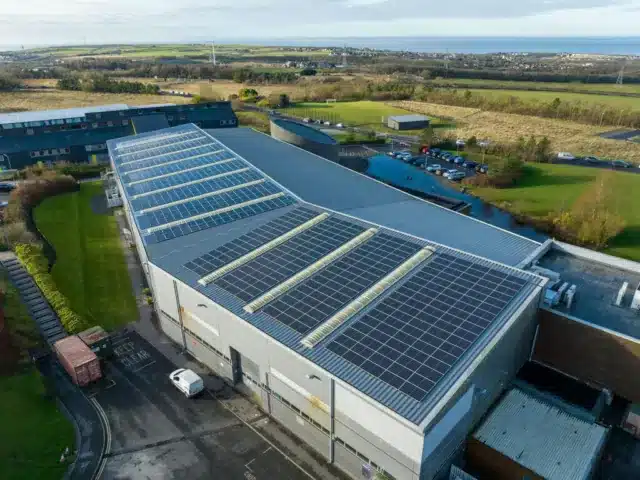
Must-Have Credentials: The Non-Negotiable Checklist
Before requesting quotes or proceeding to site surveys, verify these credentials. Any installer unable to provide evidence of all items on this list should be removed from your shortlist.
MCS Certification (Microgeneration Certification Scheme)
MCS certification is mandatory for grid-connected solar installations in the UK. Without it, the installation cannot be connected to the grid via a G99 application, you cannot access the Smart Export Guarantee (SEG), and Annual Investment Allowance may be challenged. Verify directly at mcscertified.com using the company name — do not rely solely on a certificate presented by the installer.
RECC Membership (Renewable Energy Consumer Code)
RECC membership provides a consumer protection framework covering pre-sales information, contract terms, and dispute resolution. While not legally mandatory, RECC-registered installers are bound by a code of practice that provides important recourse if problems arise. Verify membership at recc.org.uk.
NAPIT or NICEIC Electrical Certification
All electrical work must be carried out by or directly supervised by a qualified electrician registered with a competent person scheme. NAPIT and NICEIC are the primary schemes for electrical installers in the UK. Factory solar installations involve three-phase high-voltage connections, isolators, and G99 protection relays — this is specialist industrial electrical work requiring relevant qualifications and experience beyond basic domestic wiring.
BS 6399 Part 3 Structural Surveying Capability
Adding solar panels to an industrial roof significantly increases the dead load — typically 10–15 kg/m² for modern panels and mounting systems. A structural assessment to BS 6399 Part 3 (Wind Loads) and relevant sections of Eurocode 1 is essential to confirm the roof can safely support the installation. This must be conducted by a qualified structural engineer, either employed directly by the installer or engaged under their professional responsibility. Ask for the engineer's name, qualifications, and proof of professional indemnity insurance.
Insurance: Public Liability, Professional Indemnity, Employer's Liability
Request current certificates for all three insurance types. For factory-scale installations, minimum acceptable levels are: Public Liability £5M+ (covering damage to your property and third-party claims during installation), Professional Indemnity £2M+ (covering design and specification errors), and Employer's Liability (required by law for any employer). Check expiry dates — certificates expiring before your installation date are effectively useless.
3+ Industrial References Over 100kW
Ask for a minimum of three references from industrial or commercial clients who have had systems over 100kWp installed. Request contact details and speak directly with the client — do not rely on written testimonials, which can be edited or fabricated. Ask each referee specifically about post-installation support, monitoring performance, and whether the system generates at the promised level.
10 Questions to Ask Every Installer Before Signing
Ask every installer on your shortlist these ten questions. Their answers — and how readily they provide them — will tell you a great deal about their capability and professionalism.
Are you MCS certified, and can I verify your certificate number?
Any legitimate installer will answer this immediately with their certificate number. Verify independently at mcscertified.com. The certificate should be in the legal trading name of the company you are contracting with — not a parent company, sister company, or previous trading name. Ask specifically: "Has your MCS certification ever been suspended or revoked?"
Good response: Immediate certificate number provided and encouragement to verify independently.
How many factory and industrial installations over 100kW have you completed?
This is the single most important differentiator between residential/small commercial installers and genuine industrial specialists. A minimum of 10 completed industrial installations over 100kWp is a reasonable threshold. Ask for a project portfolio with system sizes, industry sectors, and installation dates. Installers with only residential experience will typically be evasive or inflate smaller commercial projects to sound more experienced.
Red flag: "We have extensive commercial experience" with no specifics on industrial system sizes.
Do you handle G99/G100 DNO applications in-house?
G99 applications (for systems over 16A per phase or over 50kW) require detailed protection relay specifications, anti-islanding settings, and technical schedules that must be submitted to and approved by your Distribution Network Operator (DNO). This process typically takes 6–20 weeks. G100 applies to systems over 1MW. If an installer outsources this to a third party, ask who bears responsibility for delays, rejections, or resubmissions — and who pays the DNO fees if the application is rejected and needs to be redone.
Best answer: In-house G99 specialist who handles all DNO correspondence directly.
Who conducts the structural roof survey — permanent staff or subcontractor?
The structural roof survey determines whether your roof can safely carry the panel weight and wind loads for 25+ years. Ask specifically: "Is the structural engineer who signs off our survey employed by your company, or engaged as a subcontractor?" If subcontracted, ask: "Are they included in your professional indemnity insurance, or do they carry their own?" You need a clear chain of professional accountability if structural problems arise later.
Best answer: In-house chartered structural engineer, with PI coverage confirmed in the contract.
What monitoring system do you install, and what data access will I have?
Industrial solar monitoring goes beyond a simple app showing generation figures. You should expect: real-time generation data at string or inverter level, fault alerts by email/SMS, export and import metering, half-hourly data export capability, and a web portal you can share with your energy manager or accountant. Ask specifically: "What happens to monitoring access if I switch energy management providers?" You must retain independent access to your data.
Best answer: Named monitoring platform, with client-owned data access independent of installer relationship.
Who do I contact if the system underperforms in year three?
This question tests whether the after-sales support structure is defined and resourced. Ask for the specific contact name, role, and communication channel for warranty claims and performance disputes in years 2–5. Ask what the defined response time is for: (a) system fault notification, (b) engineer on-site attendance, and (c) fault resolution. These should be in the contract, not just verbal assurances during the sales process.
Red flag: "Just call our office" with no defined response SLAs in the contract.
What is your snagging and defect liability period?
The defect liability period (DLP) is the period after practical completion during which the installer is obligated to rectify defects at their own cost. In construction contracts, 12 months is standard. For solar specifically, a well-structured contract will distinguish between: workmanship warranty (minimum 2 years, typically 5), equipment warranty (manufacturer warranties passthrough), and performance warranty (specifying minimum annual generation). Ask what happens to warranty obligations if the installer company goes into administration.
Best answer: 5-year workmanship warranty, with manufacturer warranties formally assigned to the client.
Can you provide three references from similar industrial installations?
References from genuinely similar installations — same size category, same industry sector if possible — are the most reliable validation of capability. Request names and direct contact numbers, not just company names. When you call, ask three specific questions: (1) Did the system achieve the projected generation figure in year one? (2) Has there been any post-installation defect, and if so how was it resolved? (3) Would you use this installer again?
Red flag: Only written testimonials offered, or references who don't answer calls or respond to emails.
What happens if your company ceases trading during the warranty period?
Solar company failures are not uncommon — the UK market has seen several large-scale insolvencies, including domestic installers and commercial operators. Understand specifically: (a) Are manufacturer warranties assigned directly to you as the client, not to the installer? (b) Is there an insolvency protection scheme in place? (c) Can you access monitoring data directly without the installer? (d) What happens to the G99 registration if the installer ceases trading? These are critical questions for a 25-year asset.
Best answer: Manufacturer warranties assigned directly to client, with escrow or insurance provision for workmanship claims.
Is your quote all-inclusive — DNO fees, scaffolding, meter upgrades?
The most common source of cost overruns on factory solar projects is items excluded from the initial quote. Specifically check: DNO application fees (can be £3,000–£20,000+ for large systems), scaffolding and access equipment (often £15,000–£40,000 on large roofs), DNO meter upgrade (required for smart export, typically £1,000–£3,000), electrical protection equipment (G99 relays and isolators), and planning fees if permitted development rights don't apply. A comprehensive quote will itemise all of these explicitly.
Red flag: Any vague language about "subject to DNO requirements" without a maximum cost estimate.
Red Flags: When to Remove an Installer from Your Shortlist
These behaviours consistently indicate a lack of the experience, integrity, or financial stability required for a major industrial solar installation.
Unsolicited Commercial Solar Sales
Legitimate industrial solar installers do not cold-call factories or send unsolicited emails or mail. If your first contact with an installer was through an unexpected outreach, treat this as a warning sign and conduct full due diligence before proceeding.
No Industrial References Over 100kW
Residential solar and factory solar are fundamentally different disciplines — different structural requirements, different electrical standards, different DNO processes, and different project management complexity. An installer without verified industrial references over 100kW is unqualified for your project, regardless of how many residential installations they have completed.
Subcontracted Structural Surveys Without Engineering Sign-Off
Some installers commission structural surveys from third parties but do not verify or take professional responsibility for the findings. If the structural survey is performed by an external party whose professional indemnity insurance is separate from the installer's PI, there is a gap in accountability that could leave you with no recourse if structural problems arise.
Pressure Tactics or Time-Limited Offers
Industrial solar is not sold on urgency. Any installer applying time pressure ("this price expires Friday", "we only have one installation slot this quarter") is using retail sales tactics incompatible with professional engineering procurement. Legitimate installers will allow appropriate time for due diligence, legal review, and board approval — typically 4–8 weeks from quote to contract signature.
No G99/G100 Experience for Systems Over 50kW
G99 applications for systems over 50kW require detailed technical specifications and engineering submissions. Installers without proven G99 experience risk rejected applications, delays of 6–12+ months, and costly redesigns. Ask specifically: "Can you provide examples of previous G99 applications you have submitted, and what was the DNO response time?"
No DNO Application Fees Mentioned in the Quote
DNO application fees are a real cost — typically £3,000–£20,000 depending on network operator, system size, and whether grid reinforcement is required. Any quote that makes no mention of these fees is either incomplete or the installer intends to charge them later. Always ask: "Are DNO fees included in this quote? If not, what is the maximum estimated additional cost?"
Understanding the Quote: What Should Be Itemised
A professional quote for a factory solar installation is a detailed engineering document, not a single-line figure. Here is what every well-structured industrial solar quote should include.
Hardware and Installation Items
- ✓Solar panels — brand, model, quantity, wattage
- ✓Inverters — brand, model, kVA rating
- ✓Mounting system — brand, type (trapezoidal, ballast, etc.)
- ✓DC and AC cabling with specification
- ✓G99 protection relay and isolators
- ✓Monitoring hardware and meter
- ✓Labour and project management
- ✓Scaffolding or access equipment
Professional and Regulatory Costs
- ✓Structural roof survey and report
- ✓G99 DNO application fee
- ✓DNO meter upgrade (if required)
- ✓Commissioning and testing
- ✓MCS installation certificate
- ✓Handover documentation and O&M manual
Performance Ratio Expectations
UK industrial systems should achieve a performance ratio (PR) of 0.75–0.82. Any quoted PR above 0.82 for a UK roof system should be queried — it is likely optimistic. PR below 0.72 suggests either poor equipment choices or shading issues that need explanation.
Panel and System Warranties
Tier 1 panels should carry 25-year product and performance warranties. Inverters should be minimum 10 years (extendable). Mounting systems minimum 10 years. Workmanship warranty from installer: minimum 2 years, ideally 5 years.
What's Often NOT Included
Electrical distribution board upgrades, roof repairs identified during survey, planning application fees (if required), asbestos survey and encapsulation, any grid reinforcement costs imposed by the DNO. Always ask what is explicitly excluded.
Contract Terms to Review Before Signing
For factory solar installations over £100,000, we strongly recommend having a commercial solicitor review the contract. These are the specific clauses that most often cause problems if left unreviewed.
1. Performance Guarantee and Remedies
Does the contract guarantee a minimum annual generation figure, and if so, what is the remedy if it is not met? "Reasonable endeavours" is weaker than a specific kWh figure with a cash remedy. Ensure the performance ratio assumption and irradiation data source are documented.
2. Payment Stage Structure
Avoid paying more than 30% upfront. A standard payment structure for industrial solar is: 20–30% on contract signature, 30–40% on delivery of equipment to site, 20–30% on practical completion, and 10% retained for 6–12 months after commissioning as defect retention.
3. Warranty Assignment and Transferability
Manufacturer warranties (panels, inverters) must be formally assigned to you as the end client. If the contract only grants you the benefit of warranties through the installer, you may lose access if the installer company is dissolved. Ask for warranties to be in your name directly or for a formal assignment deed on completion.
4. Variation and Specification Change Provisions
DNO requirements, roof condition findings, and planning conditions can require system changes post-contract. The contract should specify how variations are priced and approved — ideally a formal variation order process with written approval before any additional cost is incurred. Avoid open-ended provisions that allow the installer to claim additional cost for "unforeseen circumstances."
5. Dispute Resolution Mechanism
In the event of a dispute about performance, workmanship, or payment, you need a defined resolution process. Adjudication under the Housing Grants, Construction and Regeneration Act 1996 (applicable to most construction contracts) provides a fast-track 28-day decision process. Ensure the contract does not exclude statutory adjudication rights. RECC-registered installers also provide access to an ADR scheme for consumer protection.
6. Intellectual Property and As-Built Documentation
The installer should provide as-built drawings, string layout diagrams, single-line electrical diagrams, O&M manuals, and all commissioning test records on completion. These are essential for future maintenance, system expansion, or property sale. The contract should include a specific list of deliverable documents with a defined handover date.
Find Vetted Installers in Your Region
We've profiled specialist industrial solar installers across the UK. These posts cover installer capabilities, experience, and regional coverage.